
When choosing between a mini-split or window unit for cooling your home in the hot summer, it’s important to understand the advantages and disadvantages of each air conditioning system. Homeowners often face a tough decision due to various factors like size, installation, and cost.
The energy efficiency of the system also plays a crucial role in determining the best fit for your needs. This guide will highlight the pros and cons of both systems, helping you make an informed choice that suits your personal preference and individual requirements.
Mini-Split or Window Unit
A comprehensive comparison of window air conditioners and ductless mini-split systems shows that each option offers unique benefits and potential drawbacks. Window units are often easier and more affordable to install, making them a popular choice for rooms with specific cooling needs.
A comprehensive comparison of window air conditioners and ductless mini-split systems shows that each option offers unique benefits and potential drawbacks. Window units are often easier and more affordable to install, making them a popular choice for rooms with specific cooling needs.
Budget
Mini-splits may seem expensive at first, but they offer long-term energy savings. From my experience, the initial cost is quickly offset by lower energy bills over time. On the other hand, window air conditioner units are more affordable upfront but often come with higher energy costs as the time goes on.
Whether you’re planning for upfront expenses or considering future savings, it’s important to weigh these factors when choosing the right air conditioning solution.
Aesthetics
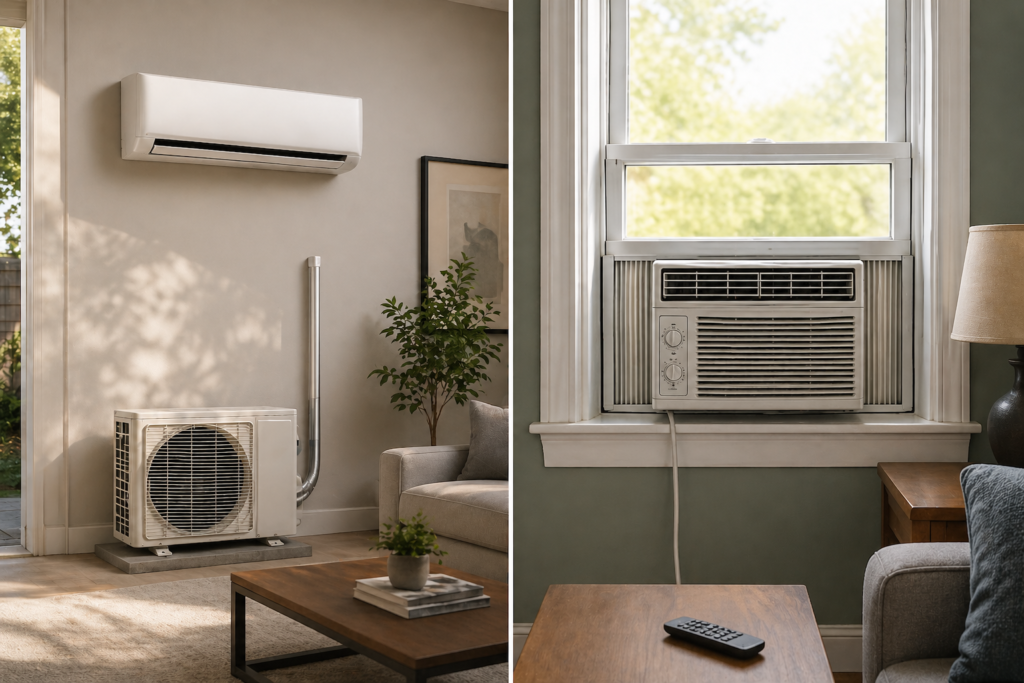
When choosing a cooling system, mini-splits definitely have the edge if you care about how your home looks. These units blend seamlessly into the home decor, making them almost unnoticeable, which I find to be a huge plus. On the other hand, window units can be quite noticeable.
They often obstruct views and stand out, which might not be ideal if you enjoy a clear view from your windows.
Installation
From my experience, Window AC units are easier to install, making them a popular choice for homeowners. These can be quickly installed without much hassle. On the other hand, mini-splits need professional installation due to their complexity. Part of that process involves decisions like running mini split lines inside walls, which affects both aesthetics and long-term maintenance.
This can lead to more disruption during the installation process, so it’s essential to factor this into your decision.
Space
If you’re aiming to cool several rooms or a large space, a mini-split might be a better choice. Window AC units are generally designed to cool single rooms or small spaces only.
Noise Level
Window ac can be loud, which can disrupt your sleep or your concentration, while mini split are silent in operation.
Energy Efficiency
There are some window ac which can be energy-efficient, but mini split are typically designed to use energy more efficiently, potentially saving you money in the long run.
Cooling Quality
For single rooms or apartments, window units are highly effective. However, mini-splits offer superior cooling and airflow, distributing air throughout an entire home. Unlike window units, mini-splits deliver consistent cooling power beyond just one room. That’s when it’s worth understanding central air vs mini split for whole-home setups.
Lifespan
Mini split can have longer life span as compared to window ac which may lead to fewer repairs or replacements, Ultimately, the decision is yours between a mini-split and a window AC unit, It is based on your specific needs and circumstances.
Window and Split AC Comparison: Which One Saves More? these considerations carefully will help you make a choice that benefits you most in the long run.
Mini Split AC Units
Mini-split air conditioners offer homeowners a flexible, ductless alternative to central conditioning. These systems have a fascinating origin — explore the history of ductless mini split technology that made them what they are today.These units consist of indoor and outdoor components that are easily installed on the wall or ceiling of a single room or multiple rooms. With a versatile design, mini-splits provide targeted cooling and heating without the need for extensive ductwork, making them ideal for homes or offices where space is limited.
They operate quietly and efficiently, ensuring energy savings and comfort. By using refrigerant to connect the indoor unit to the outdoor compressor, they maintain a comfortable temperature while minimizing energy usage and cost.
| Pros | Cons |
| Energy-efficient | High upfront cost |
| No ductwork required Worth noting: if your home already has ducts, you can explore using a mini split with existing ductwork as well. | Only cools zones |
| Quiet | HVAC pro needed |
| Versatile | No dehumidifying |
Window AC Units
Window AC units are a popular choice for cooling single rooms or small apartments, especially for apartment dwellers or those living in older homes without central air. These compact systems are easy to install on a windowsill, making them a convenient and cost-effective option for residential spaces. They provide immediate relief on hot days and are ideal for bedrooms or small living areas. While small units are perfect for compact spaces, larger models can even help cool an entire home.

Many come with features like a thermostat, remote control, and adjustable settings to tap into the versatility of these air conditioners. However, there can be some challenges like finding the right fit for a window, managing condensation outdoors, and ensuring the unit is compatible with heating systems like radiant heat. Despite these challenges, their affordable design and ability to function effectively make them a go-to choice for many looking to maintain comfort in their homes.
| Pros | Cons |
| Inexpensive | Noisy |
| Versatile | Limited by layout |
| Simple maintenance | Energy-inefficient |
| Plug-and-play | Limited airflow |
Factors to Consider when Choosing Between Mini Split and Window Units
When choosing between mini-split and window units, several considerations come into play. Let’s take a closer look at each of these factors.
Room Size
When I was choosing an AC for my home, I had to think about the size of the room I wanted to cool. Window units are great for a single room or a small apartment because they’re typically designed for that purpose. They do a fantastic job in smaller spaces and are quite effective when used correctly. However, when I needed to cool an entire house or multiple rooms, I found that a mini-split unit was the better option.
These units are incredibly flexible; they can handle large rooms and even an entire house when needed. I remember installing one and being impressed by how it efficiently cooled every corner, regardless of the size. The ability to use a mini-split for different rooms and situations made it an easy choice for me to consider.
Installation Cost
When choosing between mini-split and window units, the installation cost is a key factor to think about. From my experience, mini-split systems often have a complicated installation process and require a professional HVAC technician to properly install them.
This adds to the overall cost, making them more expensive than window units. However, mini-split systems are a permanent air conditioning solution that can add value to your home. This can be a great benefit if you’re thinking about selling your house in the future, as the value they add often offsets the higher installation costs. On the other hand, window units are more affordable and can be easily installed by homeowners without needing a technician.
Overall Functionality
When I first explored different air conditioning options, the comparison between window units and mini-split units caught my attention. I found mini-split units to be incredibly versatile. They could cool and heat multiple rooms with ease, making them ideal for those who want comfort throughout the house.
What impressed me the most were the remote controls that allowed me to make precise temperature adjustments from anywhere in the room. These advanced features were something I didn’t find in window units, which often lack such controls and advanced capabilities. This made mini-split units a clear winner for me in terms of overall functionality.
Conclusion
When choosing between mini-split and window units for your home, it’s crucial to consider your cooling needs and budget. Mini-split systems are ideal for multiple rooms and are often more energy-efficient, but they can be more expensive upfront.
On the other hand, window units are generally more affordable and easy to install, making them a practical choice for those on a tighter budget. This article has outlined the key factors to help you make an informed decision. Whether you’re looking to keep your home cool and comfortable during the hottest months or simply want to find the best choice for your preferences, weighing the pros and cons is crucial in making the right decision.
At ecobreezesolutions, At Eco Breeze Solutions, our skilled HVAC technicians are here to handle all your heating, ventilation, and air conditioning needs. We’re committed to providing high-quality service and professional guidance to keep your home comfortable and healthy year-round.
FAQs
Which is better split AC or window AC?
Split ACs suit larger rooms, with quieter operation but higher upfront costs and need professional installation. Window ACs are easier to install, cost-effective, but noisier and less efficient.
Is it cheaper to run 2 window AC or central air?
When you need to cool a single room, a window unit is a great way to save money. But for a building, using multiple window units is inefficient and often more expensive than a central air conditioning system.
How many square feet can a window AC cool?
A window air conditioner with 5,000 to 6,000 BTU units can cool 100 to 300 square feet. For larger spaces, 7,000 to 9,800 BTU models are adequate for 250 to 550 square feet. Prices start under $100 and can go up depending on size.